
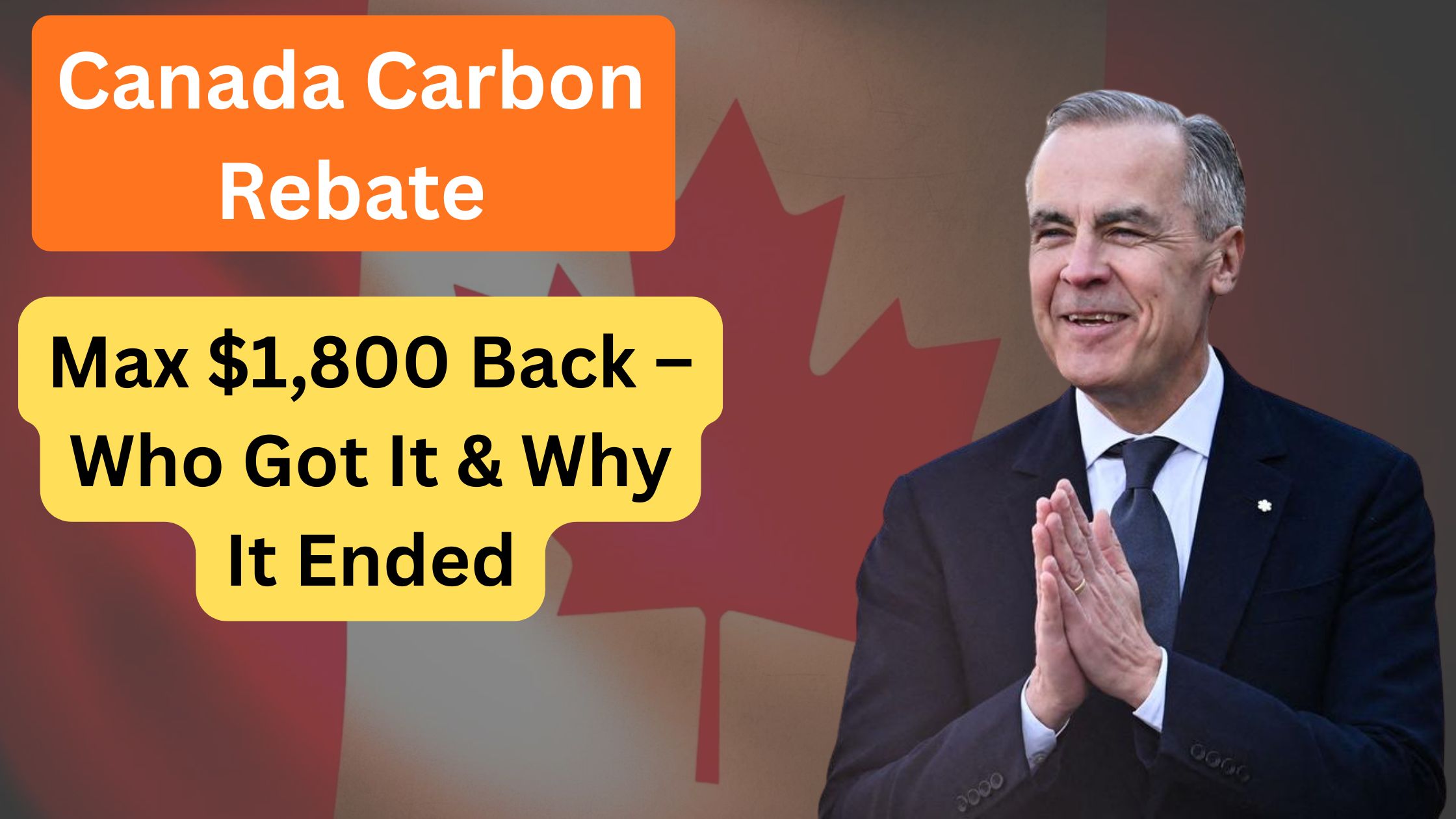
The Canada Carbon Rebate (CCR), formerly called the Climate Action Incentive Payment, offered tax-free quarterly payments to help eligible Canadians offset costs from federal carbon pricing on fuels like gasoline and natural gas. This program returned most carbon tax revenue directly to households in provinces without their own systems, making it a cornerstone of Canada’s climate action incentive. For many families, these rebates exceeded fuel charge expenses, providing real financial breathing room amid rising living costs.
Launched as part of the federal carbon pollution pricing system, the Canada Carbon Rebate aimed to encourage greener choices while ensuring fairness. It applied in Alberta, Saskatchewan, Manitoba, Ontario, New Brunswick, Nova Scotia, Prince Edward Island, and Newfoundland and Labrador—provinces relying on the federal backstop. Sadly, the program ended on March 15, 2025, with the federal fuel charge, but final payments wrapped up by April 2025, leaving a legacy of support for everyday Canadians.
Who Qualified for the Canada Carbon Rebate?
Eligibility hinged on simple residency and tax-filing rules, keeping it accessible for most. You needed to be a resident of Canada for tax purposes, living in one of the eight eligible provinces at key payment dates. In the month before a payment, you had to be 19 or older—or under 19 with a spouse, common-law partner, or child living with you.
Key exclusions kept things straightforward:
- Incarcerated for 90+ consecutive days.
- Diplomats or non-residents for tax purposes.
- Deceased recipients after payment month starts.
Filing an annual income tax return was crucial—even with zero income—to trigger automatic assessment by the Canada Revenue Agency (CRA). No separate application meant less hassle for families juggling bills.
Payment Amounts: What Families Received
Canada Carbon Rebate amounts varied by province, household size, and rural status, with quarterly payouts representing 25% of your annual total. A family of four could pocket up to $1,800 yearly in base rebates, often more with supplements—enough to cover or exceed carbon costs for 80% of households.
Here’s a snapshot of 2024-25 quarterly base amounts per adult (spouse/partner gets half; kids under 19 add per-child rates; single parents get extra for first child):
| Province | Individual | Spouse/Partner | Per Child (<19) | Family of 4 Example (Annual Base) |
|---|---|---|---|---|
| Alberta | $225 | $112.50 | $56.25 | $1,800 |
| Saskatchewan | $188 | $94 | $47 | $1,504 |
| Manitoba | $150 | $75 | $37.50 | $1,200 |
| Ontario | $140 | $70 | $35 | $1,120 |
| New Brunswick | $95 | $47.50 | $23.75 | $760 |
| Nova Scotia | $103 | $51.50 | $25.75 | $824 |
| PEI | $110* | $55 | $27.50 | $880 |
| Newfoundland & Labrador | $149 | $74.50 | $37.25 | $1,192 |
*PEI baked in rural top-up for all. Figures from official CRA quarterly breakdowns for 2024-25 period.
These tax-free payments hit bank accounts or cheques on the 15th of January, April, July, and October—shifting slightly for holidays. Direct deposit via CRA My Account sped things up reliably.
Rural Supplement: Extra Help for Small Communities
Living outside a Census Metropolitan Area (CMA)? You snagged a 20% rural supplement on top of base Canada Carbon Rebate amounts, doubling from 10% in 2024 to aid remote households hit harder by fuel reliance. All PEI residents qualified automatically; others ticked a box on tax returns using 2016 Census maps.
For example:
- Alberta rural individual: $270 quarterly ($225 base + 20%).
- Family boosts scaled similarly, pushing annual totals like $2,160 for four in Alberta.
This tweak acknowledged higher driving and heating needs in rural Canada, blending fairness with climate goals.
How Payments Worked and What to Expect Now
The CRA handled everything automatically post-tax filing, basing amounts on your prior year’s return (base year). Payments went to the first-assessed spouse/partner, covering the whole family. Shared custody split child portions 50/50; kinship care kids counted if not in formal foster systems.
Life changes like births, moves, separations (after 90 days), or deaths required prompt CRA updates via My Account, phone (1-800-387-1193), or forms like RC65. Track status in CRA My Account under benefits—no apps needed.
With the federal carbon tax axed in 2025 under new policies, quarterly rebates ceased after April 22, 2025’s final round. Provinces like BC and Quebec run their own systems; check locally for alternatives. Small businesses got separate CCPC rebates, but that’s wrapped too.
Why the Canada Carbon Rebate Mattered to Canadians
Beyond dollars, the CCR funded green transitions—proceeds built schools, transit, and Indigenous projects while rebating most back. Alberta families often netted $1,500+ yearly; Ontario singles got $560 annually base. It proved carbon pricing could work without wallet pain, pushing efficiency like EVs and insulation.
For Canadian readers feeling the pinch from energy shifts, this rebate was a relatable win—quarterly cash for groceries or gas, no strings. Though ended, its model lingers in policy talks.
FAQs
Q: Is the Canada Carbon Rebate still paying out in 2025?
A: No, it ended March 15, 2025; final payments hit by April 22.
Q: Which provinces got Canada Carbon Rebate?
A: Alberta, Saskatchewan, Manitoba, Ontario, New Brunswick, Nova Scotia, PEI, Newfoundland & Labrador.
Q: Do I need to apply for the rebate?
A: No—just file your taxes yearly; CRA handles it automatically.
Q: What’s the rural supplement amount?
A: 20% extra on base rebate for non-CMA residents.
Q: How much did a family of four get yearly?
A: Up to $1,800 base (more rural); varied by province like $1,504 Sask.

Marion (Ronnie) Serrano is a dedicated news writer focused on breaking stories, community issues, and real-time updates. With a strong eye for accuracy and clarity, Ronnie delivers reporting that informs and empowers readers. Passionate about public affairs and human-interest stories, Ronnie brings depth to every article. Outside the newsroom, Ronnie enjoys exploring new perspectives and engaging with local communities.