
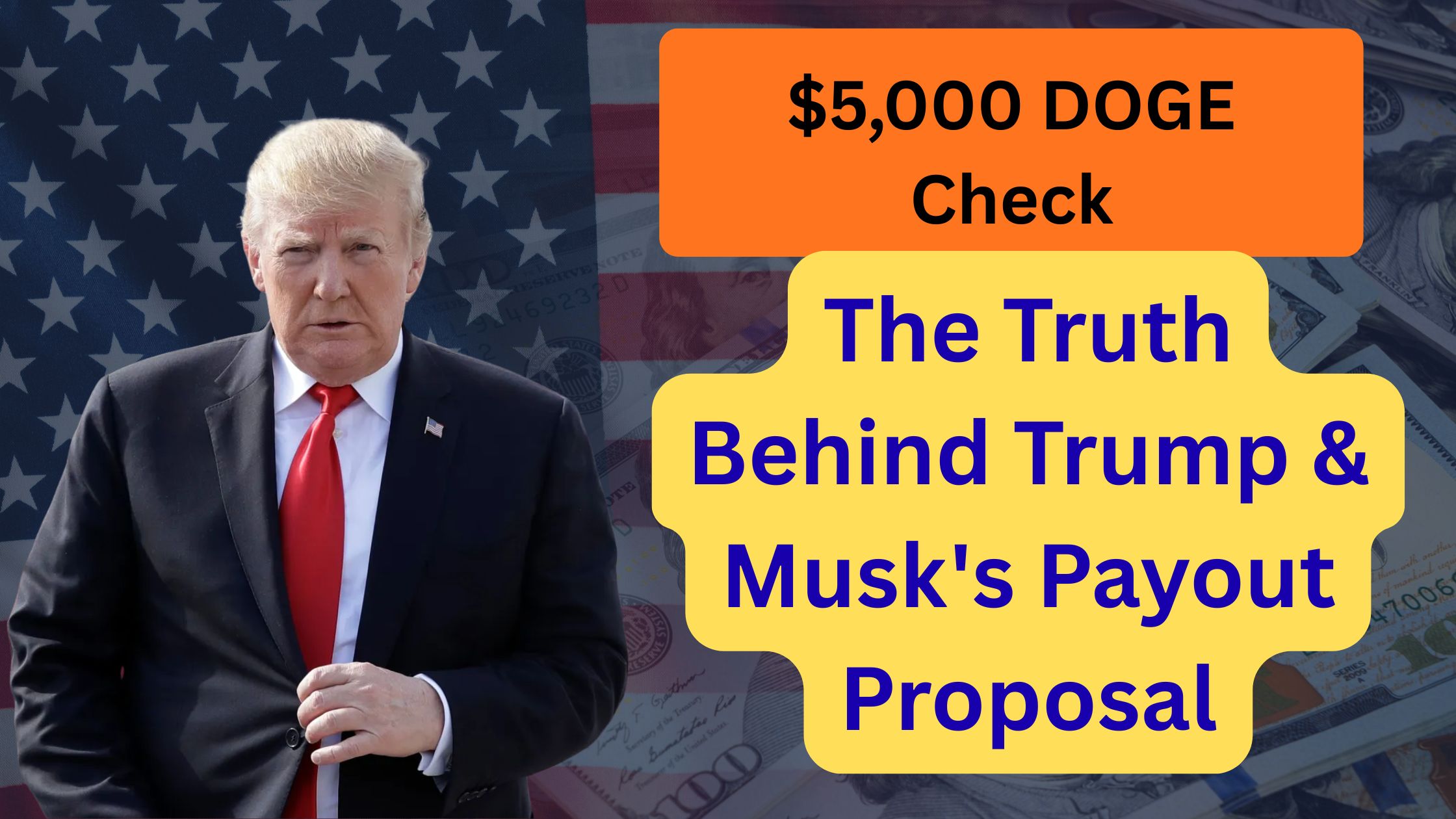
The notion of a $5000 check arriving in the mail, often referred to as the DOGE dividend or DOGE check, has generated significant buzz across the United States. This viral concept is not a traditional stimulus payment but rather a proposed tax refund tied directly to the efforts of the Department of Government Efficiency (DOGE), an initiative spearheaded by influential figures like Elon Musk and supported by President Donald Trump. For American taxpayers navigating the complex world of finance and politics, understanding the specifics of this proposal, its feasibility, and the associated risks, particularly scams, is crucial.
The Origin of the $5000 DOGE Check Idea
The discussion around the $5000 DOGE dividend began with a public proposal by an outside advisor to the DOGE team. The core idea is simple: if the Department of Government Efficiency successfully identifies and cuts a massive amount of wasteful spending within federal agencies, a portion of those savings—specifically 20 percent—should be returned directly to the taxpaying households of the United States.
- The Big Target: The DOGE initiative has a stated goal of achieving up to $2 trillion in government spending cuts by its deadline, which is currently set for around 2026.
- The Calculation: If $2 trillion in savings were realized, 20% of that total would amount to $400 billion. Dividing this among the estimated 79 million net federal taxpaying households would, theoretically, result in a refund check of approximately $5,000 per household. This potential payout quickly captured public attention, transforming a political proposal into a highly anticipated personal finance event.
The proposal has been publicly embraced by both President Trump and Elon Musk, lending it substantial visibility, but it remains a proposal, not an approved, funded, or enacted government program.
Who is the Department of Government Efficiency (DOGE)?
The acronym DOGE (Department of Government Efficiency) has become a key term in this discussion, linking the proposed refund to a commitment to fiscal responsibility. The Department is an initiative designed to reduce the federal deficit and national debt by systematically targeting and eliminating government waste, fraud, and abuse across the federal bureaucracy.
The high-profile involvement of Elon Musk has positioned the DOGE initiative as a data-driven, efficiency-focused effort aiming for unprecedented levels of cost reduction. However, the exact amount of savings confirmed by independent audits often differs substantially from the figures claimed by the DOGE team, leading to ongoing debate about the viability of the $2 trillion savings goal.
Eligibility: Who Would Receive the DOGE Dividend?
Unlike the universal stimulus checks distributed during the pandemic—which were designed to boost the economy for all Americans—the DOGE check is proposed as a tax refund or “dividend” for those who actively contribute more in taxes than they receive in government benefits. This distinction is critical for American families and individuals.
| Stimulus Checks (e.g., COVID-19 Era) | DOGE Dividend (Proposed) |
| Universal or Near-Universal eligibility based on income. | Limited to net federal taxpayers. |
| Intended to stimulate the economy. | Intended as a taxpayer refund from savings. |
| Included most low-income Americans, even those with zero tax liability. | Likely excludes households with little or no net tax liability (often lower-income Americans). |
Essentially, if the proposal is enacted in its current form, eligibility would be limited to those who are net contributors to the federal tax system. Many citizens who earn below a certain Adjusted Gross Income (AGI), who might have qualified for previous aid, may not be eligible for this specific $5,000 payment.
The Roadblocks: Why the Check is Not “Official”
Despite the political support and high-profile endorsements, the DOGE stimulus check is currently far from becoming a reality. The process of turning this concept into a tangible check involves several major hurdles:
- Congressional Approval: The power to appropriate funds and enact a tax refund of this magnitude rests with Congress. A formal bill would need to be introduced, debated, and passed by both the House and the Senate before being signed into law. This legislative process is complex and subject to intense political pushback.
- Savings Confirmation: The $5000 figure is contingent on realizing the $2 trillion in savings. Experts and non-partisan analysts question the feasibility and true extent of the cuts claimed so far, suggesting that the actual savings may be far lower, which would dramatically reduce the potential check amount.
- Economic Impact: Economists are wary of the potential inflationary effects of injecting $400 billion back into the economy, even if it is positioned as a refund from government savings. This concern mirrors debates around previous aid packages.
- National Debt Priority: The original proposal suggested allocating another 20% of the savings to pay down the national debt. Balancing the popular appeal of a direct payment with the urgent need to address the national deficit remains a primary political priority.
Beware of the Scams: Protecting Your Personal Information
The rampant speculation and news coverage surrounding the $5000 DOGE check have created a perfect environment for scammers targeting unsuspecting Americans. These malicious actors exploit the public’s excitement and confusion about government payments.
- Phishing Attempts: Beware of unsolicited texts, emails, or social media messages claiming that your “DOGE dividend payment is ready” or that you need to click a link to “verify your eligibility” or “update your direct deposit information.” This is a scam.
- Official Channels: Legitimate federal government payments, especially large-scale tax refunds, are announced through official White House, Treasury, or IRS websites and will never be initiated via a random text message or email link.
- Never Pay for a Refund: No government agency, including the IRS, will ever ask you to pay a fee, buy a gift card, or send cryptocurrency to receive a refund or dividend check.
$5000 DOGE Check Quick FAQs
1. Is the $5000 DOGE Check an official, approved payment?
No, as of now, the $5000 DOGE check is only a proposal known as the DOGE dividend. It has been supported by President Trump and Elon Musk but has not been passed by Congress or signed into law.
2. Where is the money for the DOGE dividend supposed to come from?
The money is proposed to come from 20% of the savings generated by the Department of Government Efficiency (DOGE) as they cut what they deem to be wasteful federal spending.
3. Who would be eligible to receive the $5000 DOGE check?
Eligibility is expected to be limited to net federal taxpayers—households that pay more in taxes than they receive in government benefits. It is likely to exclude many lower-income Americans who have minimal or no net tax liability.
4. Is the DOGE check related to the cryptocurrency Dogecoin?
The acronym DOGE in this context stands for the Department of Government Efficiency, not the Dogecoin cryptocurrency. However, the use of the acronym is a clear, deliberate nod to the famous meme coin often supported by Elon Musk.
5. What should I do if I receive a text or email about the DOGE check?
You should not click any links or reply to any unsolicited communications about the check. These are likely scams attempting to steal your personal or financial information. Check official government news sources for real updates.

Marion (Ronnie) Serrano is a dedicated news writer focused on breaking stories, community issues, and real-time updates. With a strong eye for accuracy and clarity, Ronnie delivers reporting that informs and empowers readers. Passionate about public affairs and human-interest stories, Ronnie brings depth to every article. Outside the newsroom, Ronnie enjoys exploring new perspectives and engaging with local communities.