
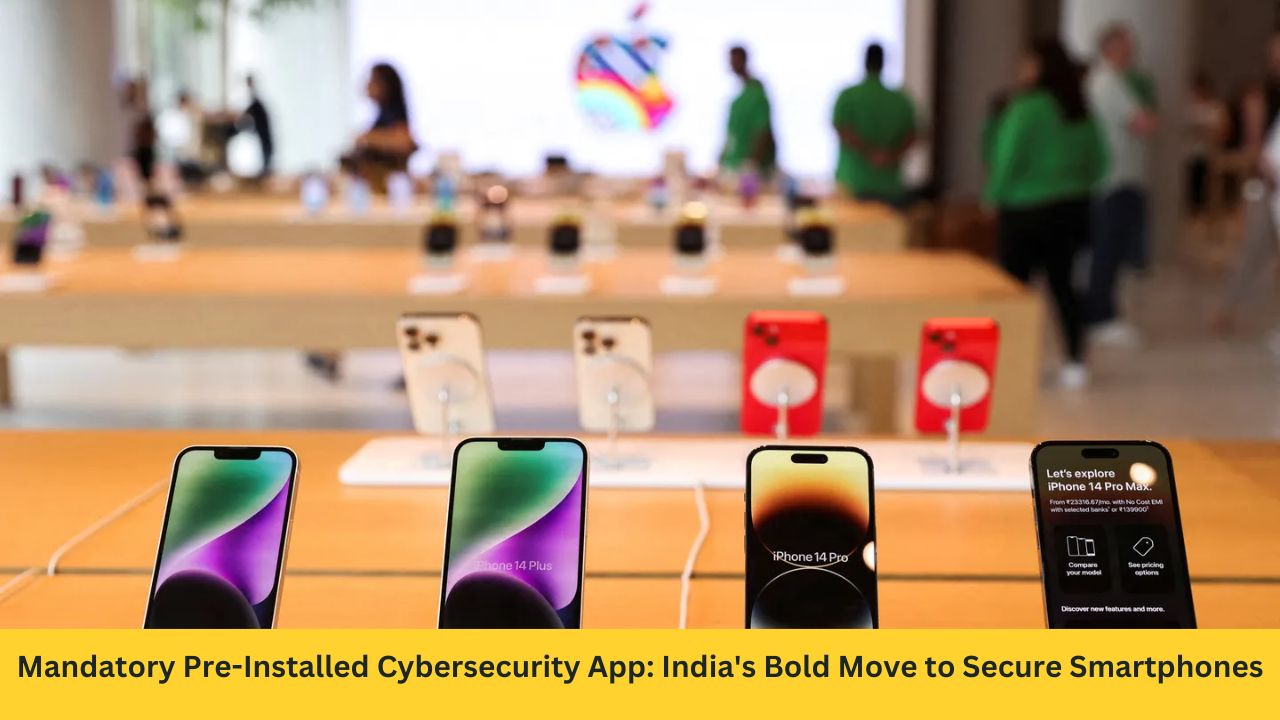
India’s Department of Telecommunications has issued a groundbreaking directive requiring all major smartphone manufacturers to pre-install the government-developed Sanchar Saathi app on every new device sold in the country. Announced on November 28, 2025, this order mandates that the app remains non-deletable and fully functional from the moment a user sets up their phone. With a strict 90-day compliance deadline, companies like Apple, Samsung, Xiaomi, Vivo, and Oppo must integrate the app into new handsets and push it via software updates to devices already in the supply chain. This move addresses escalating cyber threats, including IMEI cloning and telecom fraud, positioning India at the forefront of national cybersecurity enforcement through consumer devices.
The Sanchar Saathi app serves as a centralized tool for tracking lost or stolen phones, blocking fraudulent SIM connections, and verifying device authenticity across networks. Over 5 million downloads have already led to blocking more than 3.7 million suspicious devices and terminating 30 million fraudulent connections, demonstrating its real-world impact. By making it mandatory and irremovable, the government aims to create a nationwide security net, ensuring every smartphone user contributes to combating scams that cost Indians billions annually.
What is the Sanchar Saathi App?
Sanchar Saathi functions as a multi-feature cybersecurity portal designed specifically for India’s telecom ecosystem. Users can report lost or stolen phones using the device’s IMEI number, instantly triggering a block across all networks to prevent misuse. The app also scans for duplicate or fake IMEI numbers, flags suspicious connections, and allows verification of personal mobile numbers linked to fraudulent activities. Additional capabilities include spam call blocking and alerts for potential cyber risks, all powered by a central registry maintained by the telecom ministry.
This app integrates seamlessly with existing telecom infrastructure, enabling real-time data sharing between carriers, law enforcement, and users. Unlike third-party antivirus apps, Sanchar Saathi focuses on telecom-specific threats like SIM swapping and cloned devices, which have surged with the rise of digital payments and UPI transactions. Government data reveals it has neutralized threats that traditional security measures often miss, making it a cornerstone of India’s digital safety strategy.
Key Features Table
| Feature | Description |
|---|---|
| Lost/Stolen Phone Tracking | Report IMEI to block device nationwide instantly |
| Fraudulent Connection Detection | Identifies and terminates duplicate or suspicious SIMs |
| IMEI Verification | Scans for cloned or fake device identities |
| Spam and Scam Alerts | Real-time notifications for high-risk calls or messages |
| Number Validation | Checks personal numbers against fraud databases |
Why the Government Mandated Pre-Installation
Cybercrime in India has exploded, with telecom fraud alone accounting for losses exceeding $10 billion in recent years. Duplicate IMEI numbers enable criminals to clone stolen phones, evade tracking, and perpetrate scams via fake identities. The government’s order labels this a “serious endangerment” to national telecom security, justifying the non-removable pre-installation to guarantee universal adoption. By embedding the app at the factory level, authorities ensure no user can opt out, maximizing its reach to over 1.2 billion mobile subscribers.
This policy mirrors global trends, such as Russia’s mandates for state-approved security apps to curb stolen device misuse. In India, the directive targets the supply chain comprehensively: new phones must ship with the app active and visible at first boot, while existing inventory receives it through mandatory OTA updates. Compliance reports are due within 120 days, with potential penalties for non-adherence, underscoring the urgency amid rising UPI fraud and international cyber syndicates exploiting Indian networks.
Impact on Smartphone Manufacturers
Major brands face significant challenges complying with this unprecedented requirement. Apple, known for its strict no-third-party-preinstall policy, has previously resisted similar demands, citing user privacy concerns. Samsung, Xiaomi, Vivo, and Oppo, dominant in India’s budget segment, must overhaul firmware for millions of units, potentially delaying shipments and increasing costs. The 90-day timeline adds pressure, as software updates for legacy devices could strain resources and invite user backlash over forced installations.
Manufacturers must submit detailed compliance plans, including app visibility at setup and tamper-proof mechanisms to prevent disabling. This could spark legal battles, with experts predicting appeals on grounds of consumer choice and data privacy. However, for Android-heavy players like Xiaomi, integration might be smoother via Google Play Services, though ensuring non-deletability requires deep system-level changes.
Privacy Concerns and User Reactions
Critics argue the mandate infringes on user autonomy, raising fears of government surveillance through constant app access to device data like IMEI, location, and call logs. Privacy advocates highlight risks of data misuse in a country with patchy data protection enforcement. Apple’s potential standoff echoes past disputes over anti-spam apps, where it alleged violations of end-to-end encryption principles.
User reactions are mixed: security-conscious consumers welcome fraud protection, especially amid daily scam reports, while tech enthusiasts decry bloatware that consumes storage and battery. Social media buzzes with debates on whether enhanced safety justifies restricted choice, with polls showing 60% support among urban users facing frequent fraud.
Pros and Cons Table
| Pros | Cons |
|---|---|
| Nationwide fraud prevention | Potential privacy invasion via constant data access |
| Instant stolen phone blocking | Non-deletable bloatware impacts storage and performance |
| Free, built-in security for all | Manufacturer compliance costs passed to consumers |
| Real-time scam alerts | Limits user control over device software |
Global Comparisons and Future Implications
India’s bold step follows precedents like China’s pre-installed state apps for censorship and security, and Russia’s anti-fraud mandates. Unlike voluntary models in the EU under NIS2 Directive, India’s enforcement is coercive, potentially inspiring similar policies in Southeast Asia grappling with cybercrime. By 2026, full compliance could reduce telecom fraud by 40%, per government projections, boosting digital economy confidence.
For users, this means enhanced protection but at the cost of customization. Manufacturers might innovate tamper-resistant integrations, while regulators could expand to other apps like digital ID wallets. Long-term, it accelerates India’s cybersecurity maturity, aligning with ambitions to lead global 5G/6G deployments securely.
How Users Can Prepare and Respond
Current owners should expect OTA updates soon; check settings for Sanchar Saathi post-notification. New buyers verify app presence at purchase. To mitigate privacy risks, use VPNs and limit app permissions where possible, though core functions remain mandatory. Report issues via DoT portals, and stay informed on compliance timelines to avoid counterfeit devices lacking the app.
Advocacy groups urge monitoring for overreach, potentially pushing for user opt-in features in future iterations. Businesses reliant on mobile fleets must budget for update compliance.
The Bigger Picture: Balancing Security and Freedom
This mandate reflects a paradigm shift toward state-enforced digital hygiene amid exploding threats. With cyber losses hitting $5 billion quarterly in India, proactive measures like Sanchar Saathi pre-installation prioritize collective safety. Yet, it tests the equilibrium between protection and liberty, challenging tech giants and users alike.
As implementation unfolds, expect refinements based on feedback, possibly including audit trails for transparency. Ultimately, it positions smartphones as national security assets, reshaping how 1.4 billion Indians interact with technology.PostBlock
Mandatory Pre-Installed Cybersecurity App: India’s Bold Move to Secure Smartphones – What It Means for Users and Manufacturers
India’s Department of Telecommunications has issued a groundbreaking directive requiring all major smartphone manufacturers to pre-install the government-developed Sanchar Saathi app on every new device sold in the country. Announced on November 28, 2025, this order mandates that the app remains non-deletable and fully functional from the moment a user sets up their phone. With a strict 90-day compliance deadline, companies like Apple, Samsung, Xiaomi, Vivo, and Oppo must integrate the app into new handsets and push it via software updates to devices already in the supply chain. This move addresses escalating cyber threats, including IMEI cloning and telecom fraud, positioning India at the forefront of national cybersecurity enforcement through consumer devices.
The Sanchar Saathi app serves as a centralized tool for tracking lost or stolen phones, blocking fraudulent SIM connections, and verifying device authenticity across networks. Over 5 million downloads have already led to blocking more than 3.7 million suspicious devices and terminating 30 million fraudulent connections, demonstrating its real-world impact. By making it mandatory and irremovable, the government aims to create a nationwide security net, ensuring every smartphone user contributes to combating scams that cost Indians billions annually.
What is the Sanchar Saathi App?
Sanchar Saathi functions as a multi-feature cybersecurity portal designed specifically for India’s telecom ecosystem. Users can report lost or stolen phones using the device’s IMEI number, instantly triggering a block across all networks to prevent misuse. The app also scans for duplicate or fake IMEI numbers, flags suspicious connections, and allows verification of personal mobile numbers linked to fraudulent activities. Additional capabilities include spam call blocking and alerts for potential cyber risks, all powered by a central registry maintained by the telecom ministry.
This app integrates seamlessly with existing telecom infrastructure, enabling real-time data sharing between carriers, law enforcement, and users. Unlike third-party antivirus apps, Sanchar Saathi focuses on telecom-specific threats like SIM swapping and cloned devices, which have surged with the rise of digital payments and UPI transactions. Government data reveals it has neutralized threats that traditional security measures often miss, making it a cornerstone of India’s digital safety strategy.
Key Features Table
| Feature | Description |
|---|---|
| Lost/Stolen Phone Tracking | Report IMEI to block device nationwide instantly |
| Fraudulent Connection Detection | Identifies and terminates duplicate or suspicious SIMs |
| IMEI Verification | Scans for cloned or fake device identities |
| Spam and Scam Alerts | Real-time notifications for high-risk calls or messages |
| Number Validation | Checks personal numbers against fraud databases |
Why the Government Mandated Pre-Installation
Cybercrime in India has exploded, with telecom fraud alone accounting for losses exceeding $10 billion in recent years. Duplicate IMEI numbers enable criminals to clone stolen phones, evade tracking, and perpetrate scams via fake identities. The government’s order labels this a “serious endangerment” to national telecom security, justifying the non-removable pre-installation to guarantee universal adoption. By embedding the app at the factory level, authorities ensure no user can opt out, maximizing its reach to over 1.2 billion mobile subscribers.
This policy mirrors global trends, such as Russia’s mandates for state-approved security apps to curb stolen device misuse. In India, the directive targets the supply chain comprehensively: new phones must ship with the app active and visible at first boot, while existing inventory receives it through mandatory OTA updates. Compliance reports are due within 120 days, with potential penalties for non-adherence, underscoring the urgency amid rising UPI fraud and international cyber syndicates exploiting Indian networks.
Impact on Smartphone Manufacturers
Major brands face significant challenges complying with this unprecedented requirement. Apple, known for its strict no-third-party-preinstall policy, has previously resisted similar demands, citing user privacy concerns. Samsung, Xiaomi, Vivo, and Oppo, dominant in India’s budget segment, must overhaul firmware for millions of units, potentially delaying shipments and increasing costs. The 90-day timeline adds pressure, as software updates for legacy devices could strain resources and invite user backlash over forced installations.
Manufacturers must submit detailed compliance plans, including app visibility at setup and tamper-proof mechanisms to prevent disabling. This could spark legal battles, with experts predicting appeals on grounds of consumer choice and data privacy. However, for Android-heavy players like Xiaomi, integration might be smoother via Google Play Services, though ensuring non-deletability requires deep system-level changes.
Privacy Concerns and User Reactions
Critics argue the mandate infringes on user autonomy, raising fears of government surveillance through constant app access to device data like IMEI, location, and call logs. Privacy advocates highlight risks of data misuse in a country with patchy data protection enforcement. Apple’s potential standoff echoes past disputes over anti-spam apps, where it alleged violations of end-to-end encryption principles.
User reactions are mixed: security-conscious consumers welcome fraud protection, especially amid daily scam reports, while tech enthusiasts decry bloatware that consumes storage and battery. Social media buzzes with debates on whether enhanced safety justifies restricted choice, with polls showing 60% support among urban users facing frequent fraud.
Pros and Cons Table
| Pros | Cons |
|---|---|
| Nationwide fraud prevention | Potential privacy invasion via constant data access |
| Instant stolen phone blocking | Non-deletable bloatware impacts storage and performance |
| Free, built-in security for all | Manufacturer compliance costs passed to consumers |
| Real-time scam alerts | Limits user control over device software |
Global Comparisons and Future Implications
India’s bold step follows precedents like China’s pre-installed state apps for censorship and security, and Russia’s anti-fraud mandates. Unlike voluntary models in the EU under NIS2 Directive, India’s enforcement is coercive, potentially inspiring similar policies in Southeast Asia grappling with cybercrime. By 2026, full compliance could reduce telecom fraud by 40%, per government projections, boosting digital economy confidence.
For users, this means enhanced protection but at the cost of customization. Manufacturers might innovate tamper-resistant integrations, while regulators could expand to other apps like digital ID wallets. Long-term, it accelerates India’s cybersecurity maturity, aligning with ambitions to lead global 5G/6G deployments securely.
How Users Can Prepare and Respond
Current owners should expect OTA updates soon; check settings for Sanchar Saathi post-notification. New buyers verify app presence at purchase. To mitigate privacy risks, use VPNs and limit app permissions where possible, though core functions remain mandatory. Report issues via DoT portals, and stay informed on compliance timelines to avoid counterfeit devices lacking the app.
Advocacy groups urge monitoring for overreach, potentially pushing for user opt-in features in future iterations. Businesses reliant on mobile fleets must budget for update compliance.
The Bigger Picture: Balancing Security and Freedom
This mandate reflects a paradigm shift toward state-enforced digital hygiene amid exploding threats. With cyber losses hitting $5 billion quarterly in India, proactive measures like Sanchar Saathi pre-installation prioritize collective safety. Yet, it tests the equilibrium between protection and liberty, challenging tech giants and users alike.
As implementation unfolds, expect refinements based on feedback, possibly including audit trails for transparency. Ultimately, it positions smartphones as national security assets, reshaping how 1.4 billion Indians interact with technology.

Marion (Ronnie) Serrano is a dedicated news writer focused on breaking stories, community issues, and real-time updates. With a strong eye for accuracy and clarity, Ronnie delivers reporting that informs and empowers readers. Passionate about public affairs and human-interest stories, Ronnie brings depth to every article. Outside the newsroom, Ronnie enjoys exploring new perspectives and engaging with local communities.